
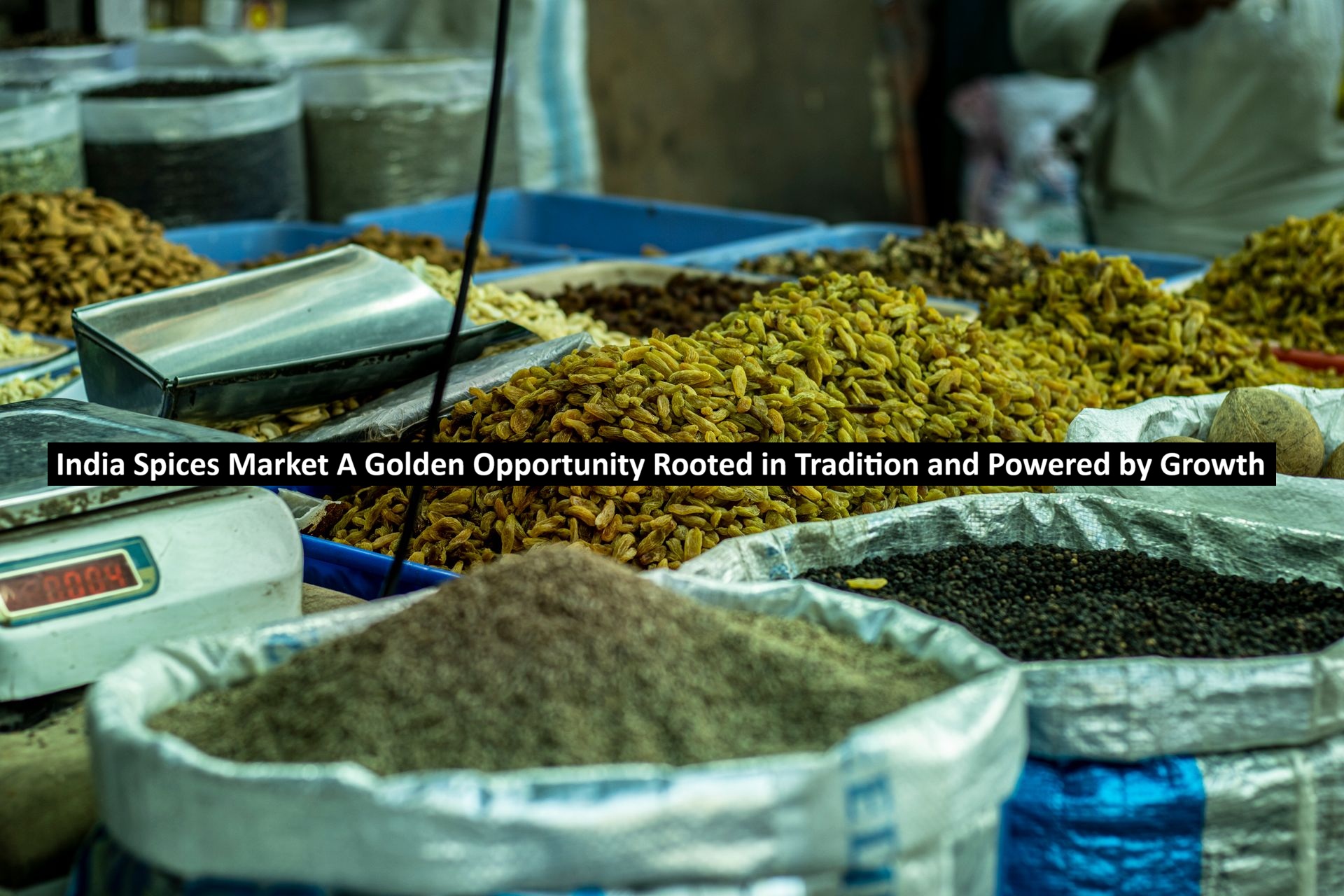
There probably hasn’t been a dinner or celebration or religious ceremony in the history of India where it was complete without a dash of pepper, turmeric, cardamom or cumin in some form or the other. India Spices Market – The History and Future For centuries, Indian spices played an integral role in its culture, economics and even political relationships and have been at the core of its civilization for a lot longer. And today, this role continues in the most significant way possible as the India Spices Market grows into the one of the largest and fastest developing sectors in the nation’s food and agribusiness sector with the international community, major FMCG companies and health-savvy customers taking notice.
The India Spices Market is projected to grow to a value of about 94,927.56 Crore in 2025 and will grow to about 2,28,885.72 Crores by 2035.
India produces about a fifth of total spices of the world; approximately 75 of 109 spice varieties (classified by the ISO) are produced in India.
Read: Protein for Work Out and Performance
Why the India Spices Market Is Thriving
We are observing immense, strong drivers pushing for outstanding growth in the India Spices Market. It helps Businesses and Spices Exporters to plan accordingly and gain the edge.
- Surging Domestic Consumption: Fuelled by its burgeoning middle class, increasing levels of disposable income, and a billion+ population, the world’s largest consumers of spices – India- is now experiencing historic demand for pure spices as well as blended versions. Urbanisation, growing shift to packaged and branded spices is all the added drive.
- Booming Spice Exports: Indian remains world #1 for spice exports; Export of Indian spices stand at USD 4.46bn FY2023-24 The demand for Indian spices from the global community is enormous. Pepper, Turmeric, Chili, Cardamom and Cumin are some of the Indian spices in demand, the list includes more than 35 spices in demand from countries like USA, China, Vietnam, Bangladesh and UAE.
- Health and Wellness Trends: There is a massive global swing to all-natural solutions with demonstrable effects. Turmeric, the turmeric compound known as curcumin has already begun and as such can be considered a well-being sensation. Health supplements, healthy beverages and food products must be based on ginger, black pepper and turmeric.
- Food Processing Industry Expansion: A lot of consumption of spice comes from food processors – instant mixes for cooking, instant curries, packaged food items like snacks and processed meats. The ministry, through MoFPI’s PMKSY, has cleared as many as 1,600 odd projects, boosting demand in the entire value chain.
- E-Commerce and Quick Commerce Growth: Digital spice retail, too, is altering the way spices are being distributed. DTC spice brands, e-commerce, as well as q-commerce are facilitating a more extensive range of high-end as well as organic spices in Tier 2 as well as Tier 3 cities than ever before.
Key Spice Segments Driving Market Value
Pure Spices
Pure spices account for the largest share, i.e., about 63% of the overall product-type market of the India Spices Market, in terms of value. Key volumes of product-types such as turmeric, cumin, cardamom, ginger, pepper, coriander, and chili ensure abundant supply throughout the year on the account of their cultivating in wide-agro-climatic zones of India, such as Rajasthan spice belts of cumin; hill districts of Kerala for cardamom; and well known chili crops of Guntur, Andhra Pradesh.
Blended Spices and Masalas
The quickest growing segment in the India Spices Market is the blended spices segment. Rise of busy city life style, reduced household sizes, need for consistent restaurant style cooking at home, have helped in increased consumption of pre-made spice blends at a brisk pace. Top brands are making substantial investments in packaging, innovations and marketing of spices such as garam masala, chaat masala, biryani masala, pav bhaji masala, among others to clock a substantial double-digit growth.
Organic and Premium Spices
The organic spice vertical has gained speed as consumers look for more sustainable and pesticide free alternatives, cleanly manufactured spices. ITC’s acquisition of 24 Mantra Organic for INR 472.5 cr in Dec 2025 is just one clear indication of how seriously the Indian big FMCG sector has started pursuing the premium organic spice market opportunity. Digital-first brands such as ZOFF Foods are attracting venture capital funding for their e-commerce focus model.
Government Initiatives Supporting the India Spices Market
India supports spice sector consistently in its trade and economic growth The Indian government has always supported the sector, through various policies and financial incentives such.
- SPICED Scheme: SPICED scheme by the Spices Board of India has an outlay of INR 422.30 Crore till FY 2025-26, covering support for exports promotion, quality up-gradation, infrastructure development for processing, international branding of Indian Spices.
- Mega Food Parks: These 41 Mega Food Parks and 394 Cold Chain projects have received in-principal approval of MoFPI’s and modernize the spice processing infrastructure that supports post-harvest losses and enhance the standards of quality products at the time of export.
- GI Tags and Branding: The list of Indian spices, which include Malabar pepper, Coorg cardamom, Alleppey green cardamom and Guntur sannam chilli, have GI tagging to safeguard their uniqueness and positioning in international spice trade.
- International Promotions: The Spices Board of India leverages top-tier global food and trade exhibitions, fostering brand presence in overseas markets for Indian spice companies, and creating lasting export contracts with key clients in European, North American and Southeast Asian markets.
Challenges the Market Must Address
However, even in the face of an enormous growth possibility, there are few threats to the India Spices Market that various stakeholder should proactively work toward mitigating:
- Quality and Safety Standards: Adulteration issue remains in unbranded segment. Increased FSSAI scrutiny and testing facilities need to keep consumer confidence, ensure India is considered an export safe country.
- International Competition: Countries such as China, Vietnam and Indonesia are increasing their Spice Manufacturing Facilities and competing strongly on the world markets. India needs to push the value added products – essential oils, oleoresins and curcumin extract- to retain their strong position.
- Climate Vulnerability: Spice crops extremely prone to weather. Monsoon fluctuations, unseasonal rains, rising temperature have had a detrimental impact on the production of spice like pepper, cardamom, turmeric. Thus, a widespread price fluctuation through the spice chain could become likely.
- Fragmented Unorganised Sector: Much of India’s spice market remains dominated by an unorganized and informal supply chain. The integration of these into branded, quality certified product lines will remain critical for achieving formalization of markets and market integration into global export requirements over the long term.
Frequently Asked Questions (FAQs)
Q1. How big is the India Spices Market currently?
India Spices Market expected to cross INR 94,927.56 Crores by 2025 Market is anticipated to grow at CAGR of ~9.20% from 2025 to 2035Market value is projected to be valued up to INR 2,28,885.72 Crores in 2035In USD terms the market size was valued about USD 8.41 billion in 2024 which is expected to grow to about USD 17-18 billion by 2032-2034
Q2. Which are the top spices produced and exported by India?
10 Most Valuable and Productive Indian Spices Indian is also recognized as the world’s first producer for chilli, cardamom, pepper, turmeric, cardamom, ginger, cumin and cardamom, spice oils and oleoresins (the extract of spices). Chilli and mint are the top exporters from the nation along with US, UAE, Bangladesh, China and Vietnam that are primary spice importers from India.
Q3. What is driving the growth of organic spices in India?
Increased consumer awareness on food safety, the worldwide trend of clean label, and greater appetite for non-chemical products- are major catalysts to organic spices. Improved penetration, particularly into cities of India, driven by higher-priced brands, organic grocery retailers and the popularity of e-commerce retailers have a brought organic Indian spice onto kitchen counter-tops, including into European and North American consumers shopping for health foods.
Q4. How is the Indian government supporting spice exports?
To ensure growth, export promotion, quality up-gradation, setting up of processing infrastructure among others, SPICED Scheme has been launched by the Spices Board of India (outlay of Rs 422.30 Cr through FY 2025-26). Besides the government’s involvement in GI Taggingof premium spices, participating in international trade fairs and support on skill development and training to spice farmers and exporters for international quality standards.
Q5. What are the biggest growth opportunities in the India Spices Market?
Most exciting growth avenues – Value add for essential oils, oleoresins, turmeric extract and ready-to-cook blends, organic, e-commerce and q-commerce channel, exports to nascent markets of SE Asia and Africa and technology infusion at the farm, manufacturing and supply chain level also represent opportunities for competitive advantage.
Conclusion
From ancient spice routes bridging India and the world, to modern-day e-commerce sites bringing high-quality masalas to your doorstep in minutes, the story of the India Spices Market reflects the enduring appeal of the category. More remarkable, however, is how it spans an uncommon nexus of culture, health, agriculture and international trade. With market size estimated at INR 2,28,885.72 Crores by 2035, positive government support, increasing domestic consumption and global demand for authentic India flavors, the India Spices Market has another decade of robust growth ahead of it.
And, although concerns regarding quality standards, climatic resilience, and rivalries from producing countries remain significant challenges, India’s rich agriculture, diverse biodiversity and historical expertise in spices are undeniable factors.
So, whether you are an entrepreneur, exporter, investor, or food brand, there’s no doubting that ‘The spice’is here to stay. Take the opportunity in the India Spices Market by either launching premium organic food, scaling export operations or investing in Agri-tech for spice farmers, because the journey of spices is as multifaceted as their flavors!